
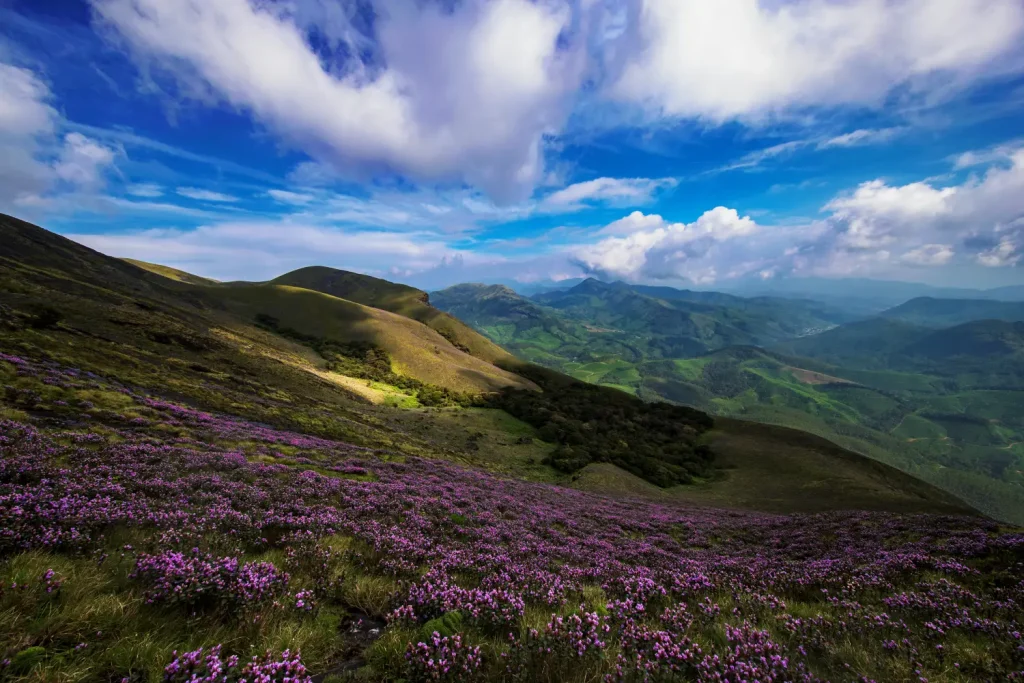
Witness the Magic of the Neelakurinji Bloom
Munnar, in the Western Ghats of Kerala, is popular for its extensive tea plantations, fog-covered mountains, cool climate and high altitude grasslands. The neelakurinji bloom is one of the most striking sights in nature when large swathes of the hills turn striking shades of blue and violet. It is truly one of the most remarkable spectacles, that is linked to the flowering of Strobilanthes kunthiana, a plant that grows in parts of south-western India. Its blooming on a mass scale is a rare event, much awaited by nature lovers and travelers. The bloom can provide a unique natural experience to an itinerary of munnar for visitors to explore munnar nearby tourist places.
But when can you witness this purple-blue miracle, which hillsides are currently painted in its shade, and what essential tips do you need before packing your bags? Read on to discover everything you need to plan the ultimate journey into Munnar’s blossoming wilderness.
What Is the Neelakurinji Flower?
The Neelakurinji flower also known scientifically as Strobilanthes kunthiana, is a flowering shrub that is endemic to the high-altitude grasslands and shola landscapes of the Western Ghats. The flowers are pale blue to mauve and can be seen in large numbers during a mass flowering.
The plant has a flowering cycle that is somewhat unusual. It is said to bloom en masse about every 12 years, which constitutes its entire life cycle. Although individual populations can have different cycles, some flowering may occur outside the main bloom. Once the phenomenon is over, the flowers set the seeds for the next generation and wither away. This unusual pattern is one reason a large-scale Neelakurinji flowering is such a memorable sight.
Why Is the Neelakurinji Bloom So Special?
The Neelakurinji bloom is a special event that happens every 12 years. The Neelakurinji flowers grow for over a decade, and then culminate by blooming in all their glory, setting up the next carpet of flowers that will continue the tradition twelve years later.
Beyond its status as a famous natural attraction in the Munnar region, it’s also known for symbolizing patient, enduring love and the passage of time.
The plant also has ecological and cultural importance in the Western Ghats. Historical and botanical records document the importance of mass flowering events to communities in the region, while the spectacle continues to attract nature enthusiasts, photographers, and travelers.
Best Places to Experience Neelakurinji in and Around Munnar
Eravikulam National Park
- Eravikulam National Park is one of the places that’s most closely associated with Neelakurinji.
- The park contains extensive high-altitude grasslands and shola forests and is also known for the Nilgiri tahr.
- Kerala Tourism identifies the park as an important location for experiencing Neelakurinji during its flowering season.
Rajamalai
- Rajamalai forms part of the Eravikulam landscape and provides a high-altitude setting with expansive mountain views.
- During flowering periods, the combination of the grasslands, surrounding peaks, and blue-violet flowers can create a distinctive landscape.
Other High-Altitude Areas Around Munnar
- Neelakurinji can occur in different high-altitude areas around Munnar, and flowering locations may vary according to the population and season.
- There have also been documented flowerings around areas such as Chokramudi, Mattupetty and other parts of the Munnar region.
- Visitors should follow current forest, park, and tourism guidelines because access to particular areas can be restricted for conservation or visitor-management reasons.
When Can You See the Neelakurinji Bloom?
Neelakurinji is not an annual attraction. Strobilanthes kunthiana is widely documented for its approximately 12-year mass flowering cycle, although different populations can have different flowering patterns.
For Munnar, the timing of a major bloom should therefore be checked against current information rather than assumed solely from the general 12-year cycle. Kerala Tourism has documented the major Rajamalai/Munnar flowering events and notes that another major bloom is anticipated around 2030. Travelers planning specifically around the flowers should verify the latest updates from Kerala Tourism, the forest authorities, and the relevant protected areas before traveling.
What to Expect During the Bloom
During a major flowering period, the Neelakurinji blooms into vibrant blue and violet tones that are scattered and spread across various sections of the mountain slopes. The high-altitude setting complements the floral spectacle by bringing cool weather, mist, and changing mountain views. The landscape is, without question, a masterpiece painted by nature itself that offers excellent opportunities for nature and landscape photography. If permitted, people can also trek through these scenic spots.
Quick Thought – The bloom is a limited-time natural event. For the same reason, popular viewing spots will become busy areas during its peak days. Visitors should behave responsibly, remain on designated routes, and avoid touching, plucking, or trampling the plants, particularly in protected areas.
Tips for Visiting During the Neelakurinji Season
- Check current flowering updates before travelling. Because peaks conditions and ideal timelines vary, knowing the exact season helps.
- Start early for cooler conditions, clearer views, and potentially smaller crowds.
- Wear comfortable shoes suitable for uneven terrain. Don’t pack footwear that cannot manage rough conditions or trekking terrains.
- Carry a light jacket and rain protection because mountain weather can change quickly.
- Always follow the park, forest, and tourism regulations.
- Do not pluck, step on, or damage the flowers by any means.
- Carry drinking water and basic travel essentials.
- Be responsible, take all waste back with you and help keep the mountain environment clean.
During a mass flowering event, travelling with a responsible conscience is necessary because the popularity of the spectacle can place additional pressure on sensitive high-altitude habitats.
Explore More Around Munnar
If you’re planning a trip to experience the visual spectacle of Neelakurinji, you can also combine the journey to go across multiple regional visual delights.
Visitors can explore Mattupetty Dam, enjoy the views at Echo Point, travel towards Top Station, or spend time beside Kundala Lake, ensuring not a moment of their time is wasted.
Then there are the tea gardens of Munnar, which are a defining part of its landscape. The Tea Museum is another place where you are gifted an opportunity to learn more about the long history of the area’s tea legacy.
These attractions make useful additions when exploring Munnar nearby places to visit, allowing travelers to experience the area’s landscapes and heritage alongside the Neelakurinji bloom.
A Rare Blue-Hued Experience in Munnar
The Neelakurinji bloom is the most striking example of how nature’s visual prowess can completely transform an entire mountain landscape and make it breathtakingly beautiful. The blue and violet flowers, high-altitude grasslands and misty hills create a visual experience that will permanently be etched into your memory, making your visit to Munnar quite something phenomenal. At the same time, the rarity of the flowering makes careful planning and responsible tourism particularly important.
Whether the flowers are the main reason for your journey or one part of a wider itinerary of plans you’ve prepared for your time there, Munnar offers an abundance of exploratory expeditions.
From its protected mountain landscapes to tea gardens and other Munnar nearby tourist places, the region is a paradise that rewards travelers who take the time to experience it respectfully without disturbing the fragile natural surroundings.